


Original price was: $89.00.$75.65Current price is: $75.65.
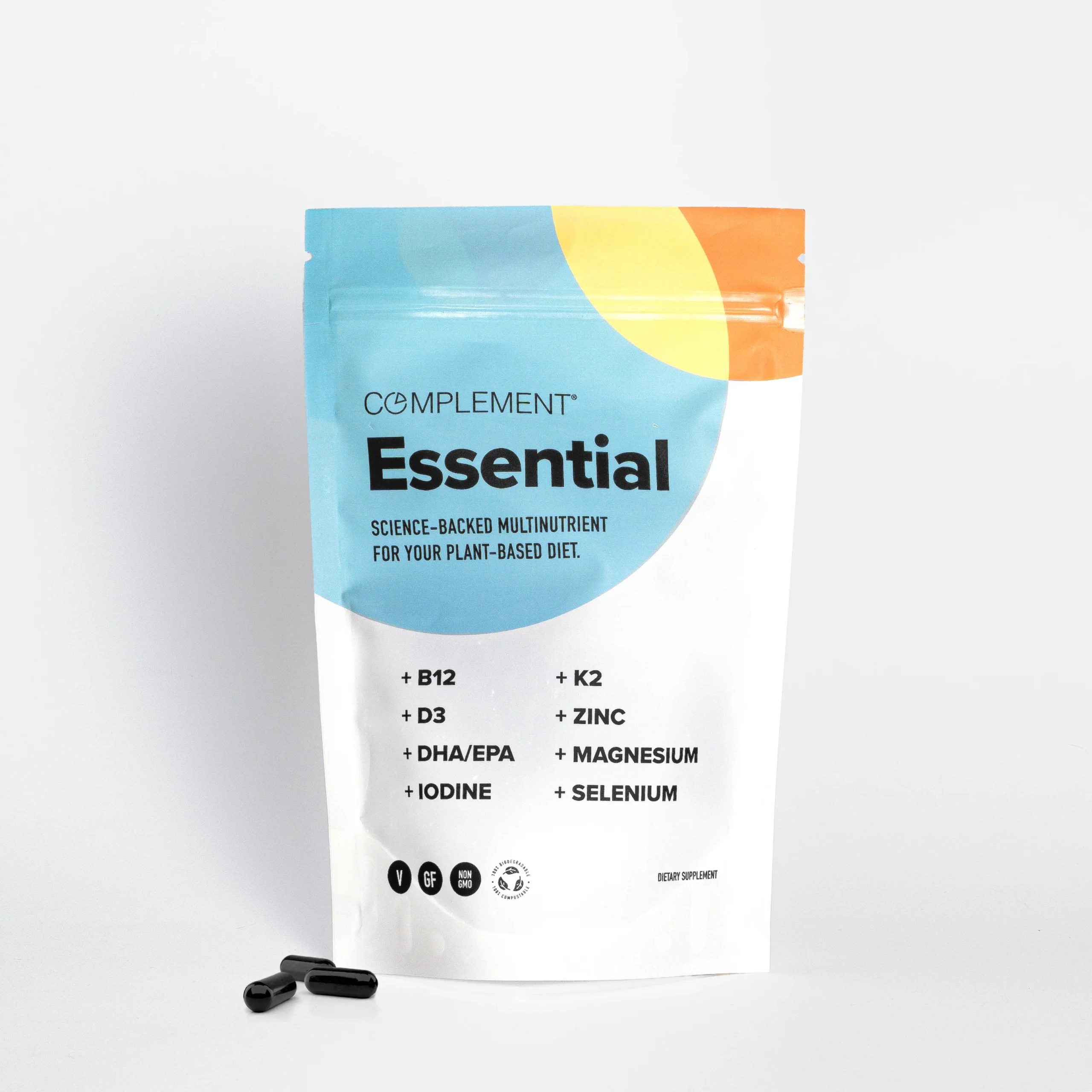
The ultimate multivitamin to optimize plant-centered diets. Evidence-based dosages of eight critical vitamins, minerals, and sustainably-sourced omega-3s, simplified into one convenient, sustainable daily habit.

Description
What if you could feel completely confident that you’re getting everything you need to thrive?
It’s an experience plant-based eaters know all too well:
A colleague or friend, after seeing your lunch, begins to pepper you with questions about protein, iron, evolution, or the latest diet trend.
Then they’ll share a scary quote from an Instagram doctor or an article that features new research on deficiencies in a plant-based diet.
No matter how good you feel about your choices, it’s only natural for those questions to creep into the back of your mind…
Sowing tiny seeds of doubt that you may not be making the right choice for your long-term health.
Instead of trying to ignore the nagging concerns in the back of your mind…
- Supports all-day energy, immune, heart, & brain health.*
- Promotes foundational health & longevity.*
- Helps regulate normal metabolism.*
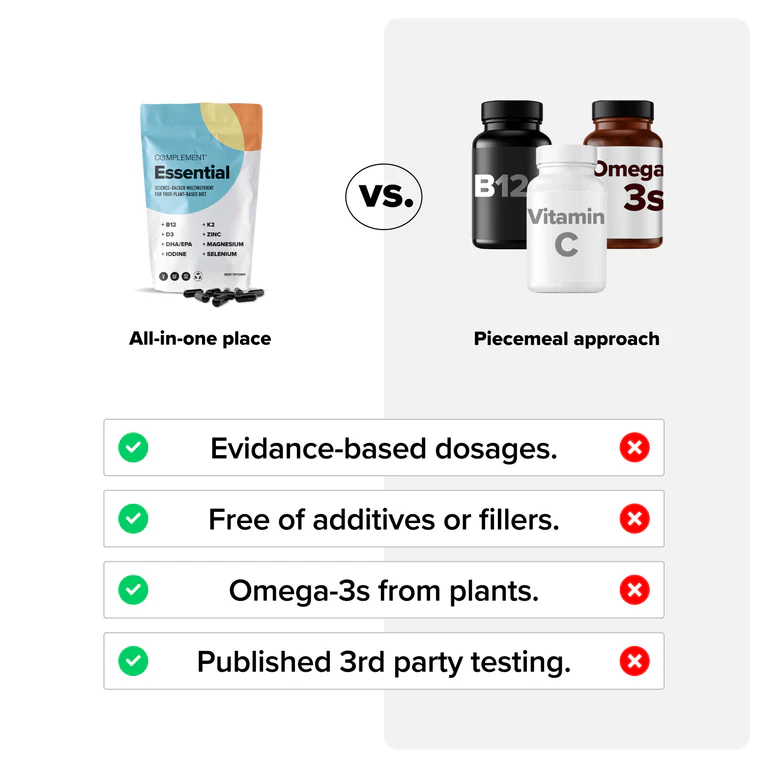
- Third-party tested.
- 100% compostable pouch.
- Essenced with peppermint.
Ingredients
Vitamin K2 – 50 mcg:
K2 isn’t available in plant-based foods except for natto, a Japanese fermented soy product (and it’s not in tempeh), so those eating Western diets need to supplement in order to get it.
Vitamin D3 – 50 mcg:
We love nature and spending time outdoors. But we also wear clothing, and most of us work inside during daylight hours. That means our natural ability to soak up the sun’s rays is limited, and as a result, many of us — regardless of dietary pattern — might be deficient in Vitamin D.
DHA/EPA Omega-3s – 470 mg:
Vegan food sources of Omega-3s like flax and chia seeds don’t provide two essential types — namely DHA and EPA. Seeds provide ALA Omega-3s, and are an amazing addition to your plate, but most people do not convert ALA into DHA and EPA.
Iodine – 150 mcg:
Worldwide, iodine deficiency affects two billion people and is the leading preventable cause of intellectual and developmental disabilities. In plant foods, iodine is found inconsistently and depends on the iodine content of the soil. It’s possible to get enough iodine if you regularly eat seaweed (multiple times a week), or use iodized salt, but this is one essential nutrient that shouldn’t be overlooked whether you’re vegan or not.
Magnesium – 200 mg:
Soil depletion is a major cause of Magnesium deficiency in the overall population, and affects vegans as well as non-vegans.
Selenium – 50 mcg:
Our depleted soil may mean that plant foods, in general, do not contain enough Selenium (and that’s even true for some Brazil nuts).
Zinc – 8 mg:
Legumes and seeds are the best natural sources on a plant-based diets, but vegans who avoid those food groups, as well as those who are worried about its bioavailability can benefit from the addition of Zinc with Complement Essential.
Vitamin B12 – 300 mcg:
Soil bacteria produce Vitamin B12 — which is essential for humans in order to protect neutral health and reduce inflammation. But modern agriculture and other human behaviors decimate these bacterial colonies that produce B12.
Is this for me?
Complement Essential takes the guesswork out of supporting a healthy whole-food diet with an all-in-one multinutrient containing the essential nutrients proven to be lacking in most plant-forward diets.
If you want to improve your longevity by supporting your heart health, cognitive function, and immunity — so you feel like your most vibrant self each day — then Essential is right for you.
For best results, take 3 capsules daily with a meal.
The science
Instead of cramming together dozens of vitamins and minerals you’re already getting through food, Complement Essential focuses on the 8 hard-to-get nutrients, in dosages that make a difference.
Here’s a look at the science:
Vitamin B12 among Vegetarians: Status, Assessment and Supplementation. LINK
Prevalence and correlates of vitamin D deficiency in US adults. LINK
Linus Pauling Institute,Micronutrient Information Center, Iodine LINK
Dietary Reference Intakes for Vitamin A, Vitamin K, Arsenic, Boron, Chromium, Copper, Iodine, Iron, Manganese, Molybdenum, Nickel, Silicon, Vanadium, and Zinc. LINK
Linus Pauling Institute,Micronutrient Information Center, Essential Fatty Acids LINK
Status of the World’s Soil Resources. LINK
A healthy gastrointestinal microbiome is dependent on dietary diversity. LINK
Distinct microalgae species for food—part 2: comparative life cycle assessment of microalgae and fish for eicosapentaenoic acid (EPA), docosahexaenoic acid (DHA), and protein. LINK
Life cycle assessment of fish oil substitute produced by microalgae using food waste. LINK
Related products
-
Sale!

COMPLEMENT® Vanilla Organic Protein
Original price was: $59.00.$50.15Current price is: $50.15. Buy Now -
Sale!
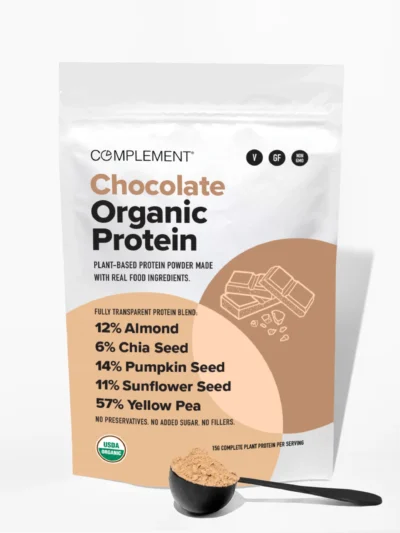
COMPLEMENT® Chocolate Organic Protein
Original price was: $59.00.$50.15Current price is: $50.15. Buy Now -
Sale!
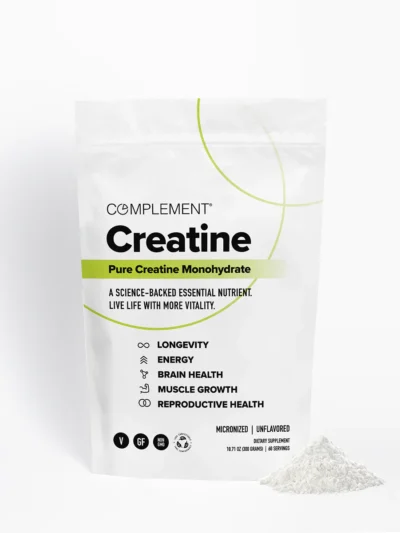
COMPLEMENT® Creatine
Original price was: $39.00.$33.15Current price is: $33.15. Buy Now -
Sale!

COMPLEMENT® Organic Daily Greens
Original price was: $49.00.$41.65Current price is: $41.65. Buy Now
